


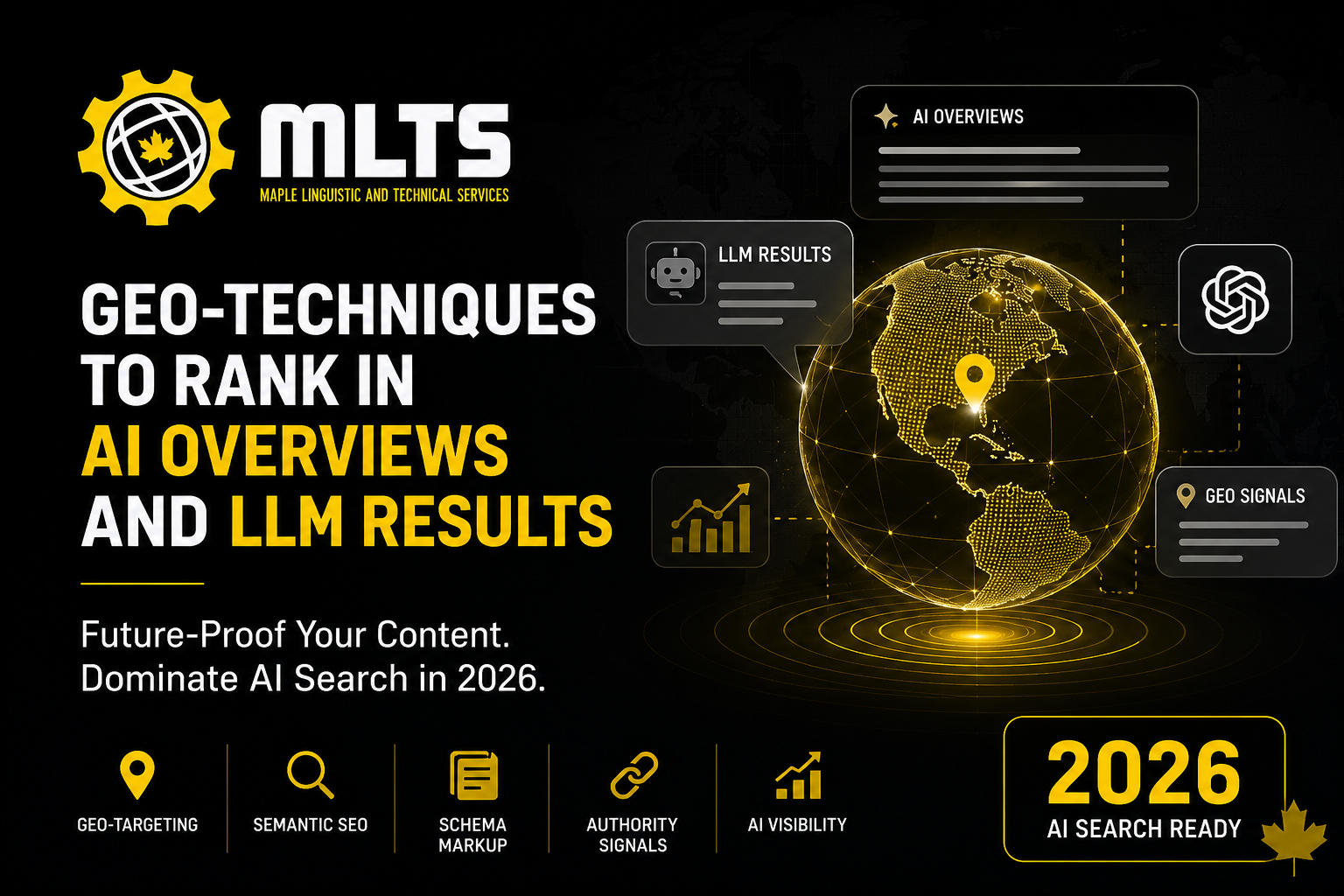
The way people search online is changing rapidly. Instead of browsing multiple search results, users now rely on AI-powered platforms like Google AI Overviews, ChatGPT, Gemini, Claude, and Perplexity for instant answers. This shift has introduced Generative Engine Optimization (GEO), a modern approach that helps businesses improve their visibility in AI-generated search results.
At MLTS Canada, we help businesses prepare for the future of search by combining traditional SEO with AI-focused optimization strategies. Here are the key GEO techniques that can improve your chances of appearing in AI responses.
What is Generative Engine Optimization (GEO)?
Generative Engine Optimization (GEO) is the process of optimizing your website and content so AI search engines can understand, trust, and reference your information when generating answers.
Unlike traditional SEO, GEO focuses on:
- AI-friendly content
- Topical authority
- Structured information
- E-E-A-T signals
- Brand credibility
The goal is to position your website as a reliable source for AI-powered search platforms.
Why GEO Matters in 2026
AI-powered search is becoming the preferred way for users to find information. Platforms like Google AI Overviews, ChatGPT Search, Gemini, Microsoft Copilot, and Perplexity provide direct answers instead of only displaying website links.
If your content isn’t optimized for AI, your business could miss valuable visibility opportunities, even if your website ranks well in traditional search results.
Top GEO Techniques to Improve AI Visibility
1. Build Topical Authority
Focus on publishing content around your core services instead of covering unrelated topics. Creating multiple articles on SEO, content marketing, local SEO, AI search, and digital marketing helps establish your website as a trusted industry resource.
2. Answer User Questions
AI platforms are designed to answer questions. Write content that directly addresses common customer queries and include FAQ sections throughout your website. This makes it easier for AI systems to extract relevant information.
3. Strengthen E-E-A-T
Experience, Expertise, Authoritativeness, and Trustworthiness remain essential. Add author profiles, showcase client success stories, publish original insights, and display reviews and certifications to build credibility.
4. Use Structured Data
Schema markup helps search engines and AI understand your content more accurately. Implementing FAQ, Article, Organization, and Local Business schema can improve how your website is interpreted.
5. Publish Original Content
AI systems value unique information. Instead of repeating existing content, share industry insights, case studies, research, or practical experiences that provide real value to readers.
6. Optimize for Entities
Rather than relying on repetitive keywords, naturally include related terms and concepts. For example, instead of repeating “SEO company,” also use phrases like digital marketing agency, SEO consultants, technical SEO experts, and AI search optimization.
7. Increase Brand Mentions
A strong online presence extends beyond your website. Guest articles, business directories, digital PR, interviews, and partnerships help strengthen your brand authority across the web, increasing trust with AI systems.
8. Create Comprehensive Content
Well-structured, informative content is more likely to be referenced by AI. Cover important topics with clear headings, practical examples, comparisons, and FAQs so users and AI platforms can easily understand your content.
9. Maintain Strong Technical SEO
Technical SEO remains the foundation of successful GEO. Ensure your website is mobile-friendly, loads quickly, uses HTTPS, has a clear site structure, and is easy for search engines to crawl and index.
10. Optimize for Conversational Search
People now search using natural language rather than short keyword phrases. Write content that answers conversational questions and reflects how users interact with AI assistants.
GEO Optimization Checklist
Before publishing new content, make sure you:
- Build topical authority
- Include FAQ sections
- Add structured data
- Showcase author expertise
- Publish original insights
- Use internal linking
- Write conversational content
- Strengthen brand mentions
- Optimize technical SEO
- Keep content updated regularly
The Future of LLM SEO
As AI search continues to evolve, businesses must go beyond traditional SEO. Success will depend on creating trustworthy, informative, and well-structured content that AI systems can confidently reference.
Organizations that invest in both SEO and GEO today will be better positioned to gain visibility across Google AI Overviews, ChatGPT, Gemini, Claude, and future AI-powered search platforms.
Conclusion
Generative Engine Optimization is becoming an essential part of digital marketing. While traditional SEO continues to drive organic traffic, GEO helps businesses earn visibility in AI-generated search results. By focusing on authority, high-quality content, technical SEO, structured data, and user-focused information, businesses can stay competitive as AI reshapes the future of online search.
Frequently Asked Questions
What is GEO?
GEO (Generative Engine Optimization) is the process of optimizing content so AI platforms can understand and reference it in their responses.
What is LLM SEO?
LLM SEO focuses on making content more accessible and trustworthy for AI models such as ChatGPT, Gemini, Claude, and Perplexity.
Is traditional SEO still important?
Yes. Traditional SEO remains important, but combining it with GEO provides better visibility across both search engines and AI-powered platforms.
How can MLTS Canada help?
MLTS Canada offers SEO, AI-focused GEO strategies, technical optimization, content marketing, and digital marketing solutions to help businesses improve their online presence in both traditional and AI-driven search.